
Workplace
OCCDerm Workplace Health Information
Healthcare workers
Healthcare workers
The complex workplace environment increases the potential for healthcare workers (HCW) to be exposed to many irritants and allergens that can damage the skin. HCWs with damaged skin on their hands are at greater risk of compromising infection control, risking their own health and potentially patients’ health also.
HCWs can develop both irritant contact dermatitis (ICD) and allergic contact dermatitis (ACD) and are also at a higher risk of developing latex allergy because of their exposures. It is not uncommon for HCWs to have a combination of these diagnoses. In addition, individuals with pre-existing eczema may experience aggravation of their skin condition.

Irritant contact dermatitis
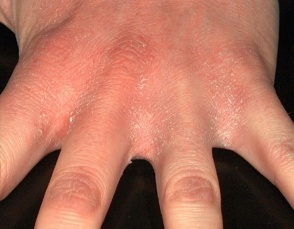
ICD is the most common form of dermatitis experienced by HCWs (Figure 1).
Common irritants affecting HCWs include:
- Water and wet work, mainly due to frequent handwashing
- Antiseptic skin cleaners and soaps
- Drying of the skin using paper towels
- Hot water
- Heat and sweating, especially if wearing occlusive gloves for long periods of time
- Low humidity or an air-conditioned environment
- Glove powder
ICD can be severe enough that an individual requires job modification, or extended time away from work.
Figure 1 – Example of ICD with the sentinel sign
Latex allergy
HCWs have been the occupational group most affected by latex allergy, although fortunately this is not as common as ICD or ACD. Latex gloves (particularly powdered varieties) are one of the more common causes of latex allergy. The powder facilitates the transfer of the latex allergen to the skin and also aerolises it, so latex proteins that have attached to the powder can be inhaled, ingested or enter the skin via cracks and splits in the skin.
Allergic contact dermatitis
Common allergens affecting HCWs include:
- Carbamates and thiurams – found in many rubber gloves
- Colophony – found in sticking plasters
- Methylisothiazolinone – still in some hand cleansers
- Formaldehyde releasing preservatives used in water-based products such as hand washes and moisturisers
- Coconut diethanolamide – found in many skin cleansers, especially hand washes
- Fragrances – used in skin cleansers and moisturisers
Face masks
During the COVID pandemic, the Skin Health Institute assessed many HCWs with facial dermatoses related to face masks, which led to aggravation of underlying skin conditions such as acne, seborrheic dermatitis and atopic eczema (dermatitis).
Additionally, pressure and friction from mask components may cause irritation. ACD from face masks is rare although we have reported certain N95 masks to have a rubber chemical (mercaptobenzothiazole) in the straps. The Australasian College of Dermatologists have released a document on how to avoid skin problems associated with mask wearing.
Additionally, they have also released information to help support clinicians when providing mask exemptions.

Advice for healthcare workers
- Be aware of the risks for developing contact dermatitis
- Minimise contact with known skin irritants and allergens where possible
- Use alcohol-based hand rubs whenever possible and appropriate
- Ensure appropriate moisturiser is available at all times and especially used after work
- Protect the skin by using gloves appropriately
- Gloves should be changed regularly to reduce sweating
- Appropriate gloves should be worn such as non-powdered latex (to reduce the risk of latex allergy), or non-latex such as nitrile gloves. Vinyl gloves are not appropriate for healthcare workers as they do not provide adequate protection against bodily fluids
- Develop and implement an effective skin care policy in the workplace
- Implement a referral system for those with skin problems
- Liaise with infection control staff about appropriate gloves and hand washes if skin is damaged
- If skin problems persist see your local doctor or staff clinic who may refer you to a dermatologist
It is also important to look after skin at home, such as wearing gloves when washing dishes, regularly using a moisturiser and using soap substitutes.
HCW and hand hygiene modules
A comprehensive online contact dermatitis module for healthcare workers is now available on the Hand Hygiene Australia website https://www.hha.org.au/online-learning/complete-a-module. Please complete this module and email your certificate of completion to [email protected]
HCW what to do if HCW develop dermatitis – flow charts – 2 of them
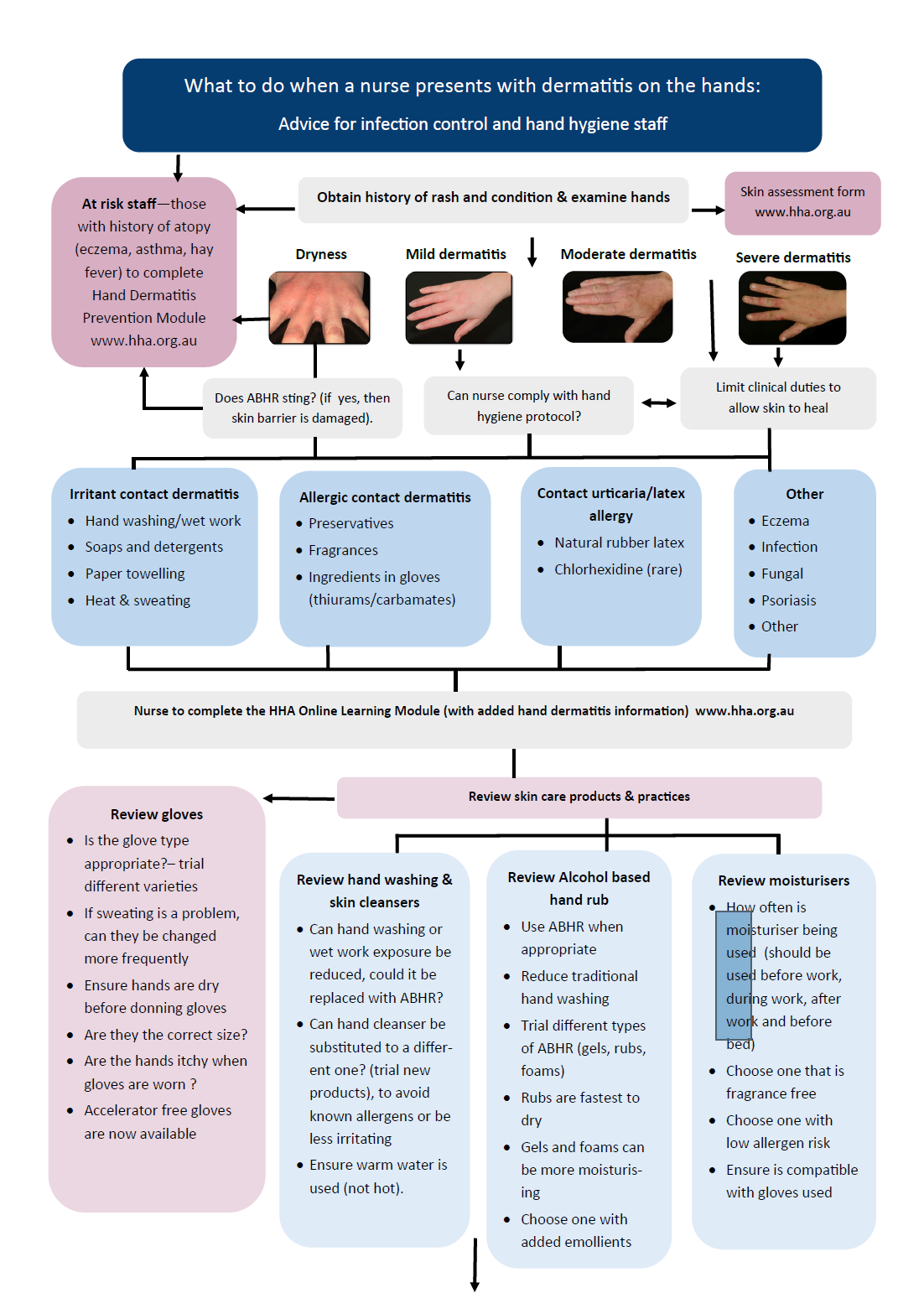
Second page
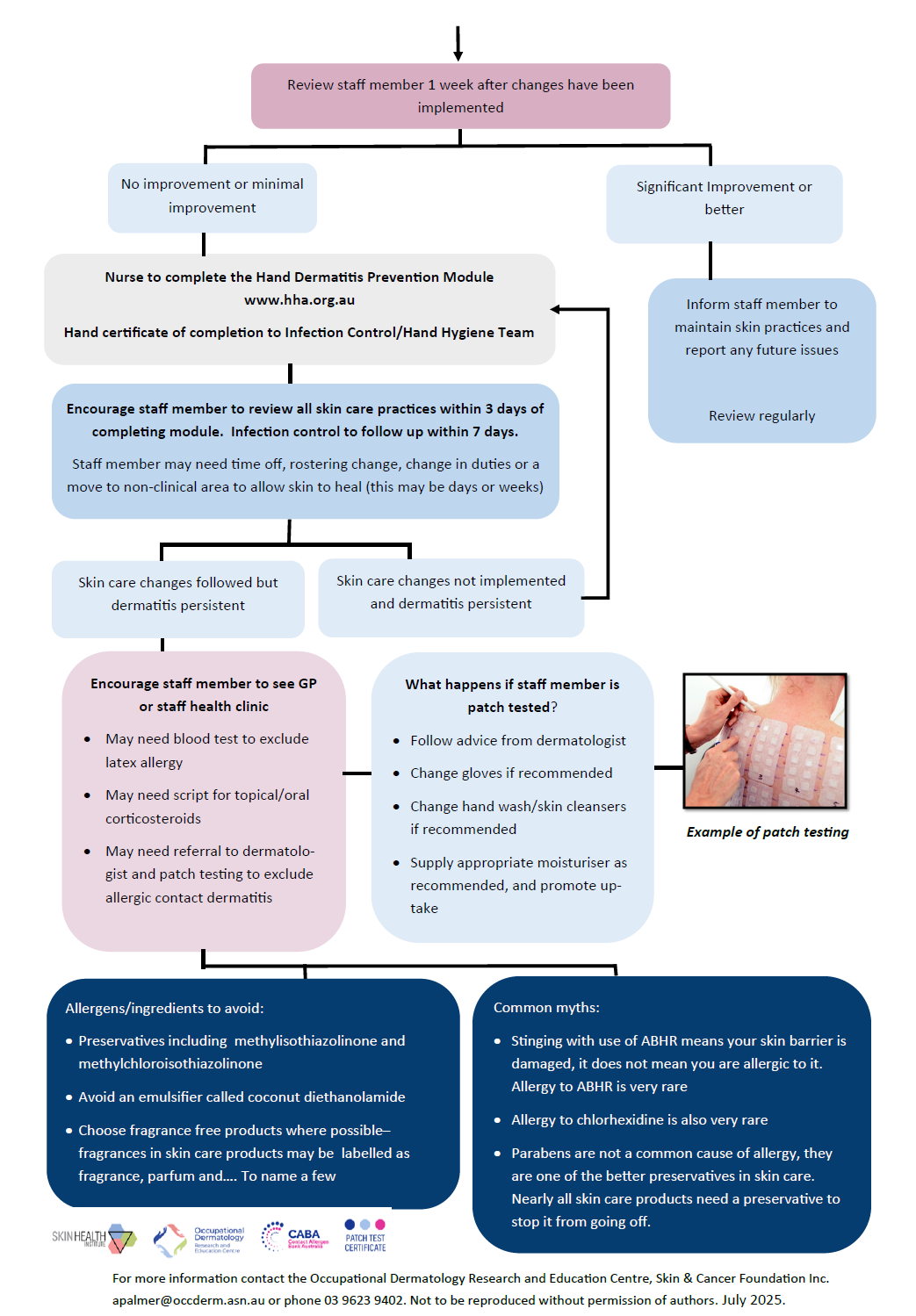
These are available to download here……hyperlink
This one-page summary can be beneficial for hand hygiene staff….
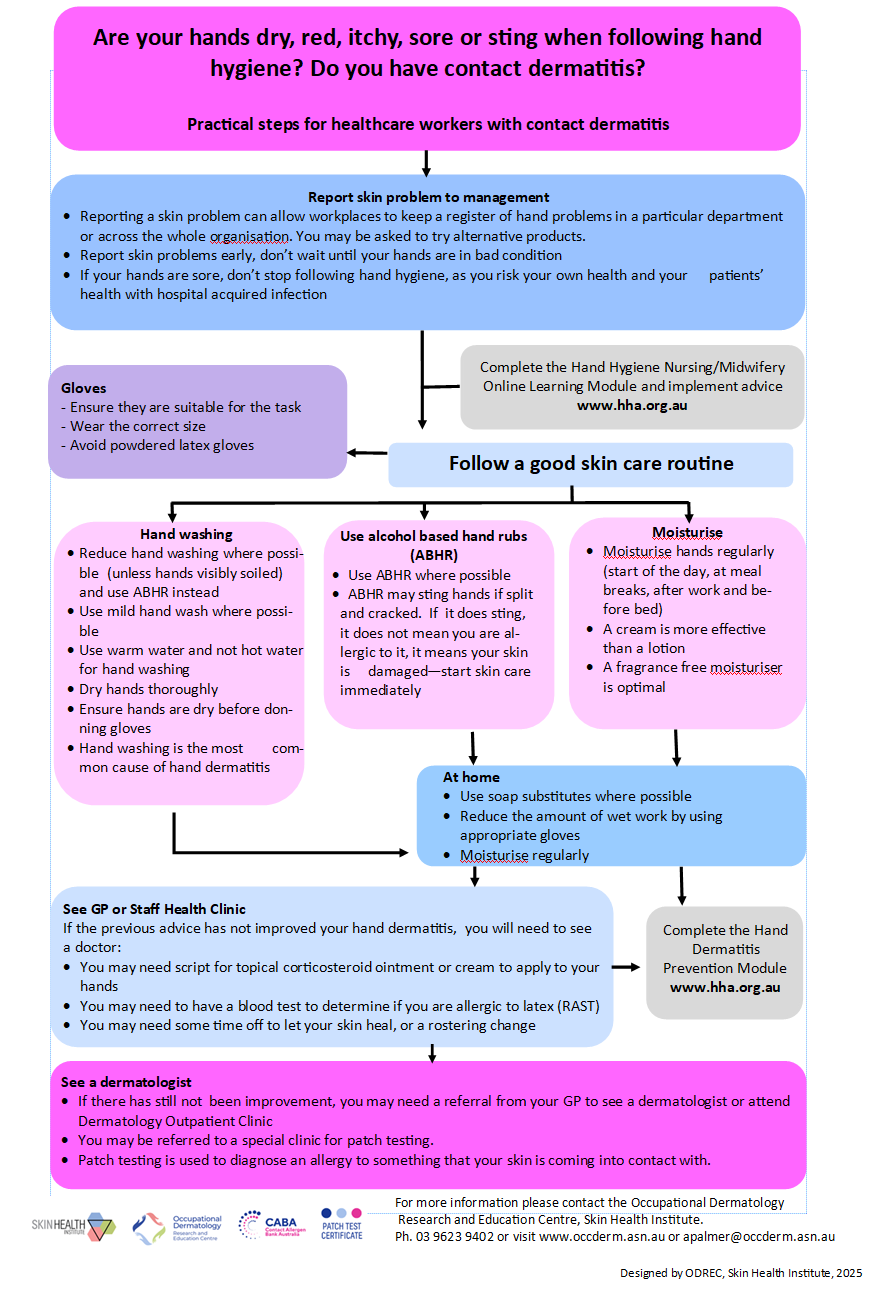
Please download here – insert hyperlink
Hairdressers and beauty therapists
Hairdressers and beauty therapists
Hairdressers and beauty therapists come into contact with a large range of substances each day at work, such as shampoos and conditioners, dyes, hairdressing bleach, waxes, massage oils, skin products, nail glues and nail polishes. These products are made up of many different chemicals that can affect the skin and may lead to contact dermatitis.
Skin irritants are the most common cause of occupational contact dermatitis in hairdressers and beauty therapists. Irritant contact dermatitis (ICD) is particularly common in apprentices, junior and casual staff and those who often perform a lot of basin work. This condition tends to occur gradually and may slowly worsen over time.
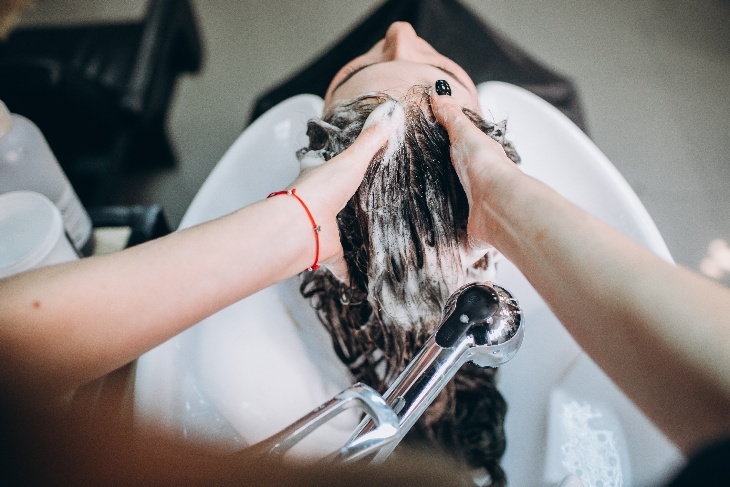
In the hairdressing and beauty industry, the most common irritants are:
- Water from repetitive washing of clients’ hair and from handling wet hair
- Shampoo, conditioner and styling products
- Hairdressing bleach and perming solution
- Soaps and detergents
- Cleaning products
- Not drying hands properly
- Heat and sweating
Understanding the importance of skin care and use of personal protective equipment from the very beginning of a hairdressing or beauty therapist career will assist in the prevention of ICD.
Allergic contact dermatitis
Allergic contact dermatitis (ACD) can occur at any time in a hairdresser’s or beauty therapist’s career and often happens after ICD has already damaged the skin.
Common allergens in the hair and beauty industry include:
- Hair dyes – paraphenylenediamine (PPD)
- Hairdressing bleach (ammonium persulfate)
- Perming solution
- Chemicals used in rubber gloves
- Acrylates used for artificial nails including shellac
- Fragrances in hair and cosmetic products
- Colophony (contained in depilatory waxes). Those allergic to sticking plasters may also be allergic to depilatory waxes.

Contact Urticaria
Hairdressers are also at risk of developing contact urticaria. In hairdressing and beauty therapy, causes of contact urticaria may include:
- Natural rubber latex e.g. powdered disposable latex gloves
- Hairdressing bleach (dust free bleach can lessen the likelihood of developing this type of allergy)
Testing is performed by a serum (blood) test or skin prick test at a specialised allergy centre.
Temporary tattoos
Hair dye has become an important cause of allergy to so-called ‘henna’ tattoos. Pure henna (a plant extract) does not cause allergy; however temporary henna tattoos often have hair dye added to them to make the tattoo darker and last longer.
Cases of ACD have been reported from people who have had a temporary ‘tattoo’ applied when they have been on holiday in Bali and other overseas destinations.
This allergy can be extremely severe as the dye may be applied in much stronger concentrations than when it is applied to the hair. In some cases, it may be mixed with a solvent, which aids skin penetration. This tattoo may cause allergy to develop and usually doesn’t cause a rash straight away, however, may occur several days later, even after returning home. Subsequently, when the person is exposed to hair dye, eyebrow or eyelash tint, an extreme reaction may develop.
This allergy to hair dye is permanent and would almost certainly ruin a hairdressers’ career.
Tips and advice for hairdressers and beauty therapists
To prevent work-related contact dermatitis occurring or recurring in this occupational group, it is imperative that hairdressers and beauty therapists use gloves for the task being performed. It is not uncommon for them to begin to wear gloves only when the skin on their hands is already damaged. The long-term outcomes for hairdressers and beauty therapists with occupational contact dermatitis are generally poor and many sadly end up leaving the profession. Appropriate education and use of preventative measures may reduce the chances of this occurring and preserve their careers.
It is important to wear gloves when:
- Mixing and applying hair colours
- Mixing and applying bleach
- Perming
- Rinsing out chemicals
- Shampooing
- Using chemicals for artificial nails
- Handling wax (especially if there is a history of problems with sticking plaster)
- Cleaning the salon, therapy beds and equipment
In addition to recommending gloves, glove education is also needed. Some important glove tips that hairdressers and beauty therapists need to know include:
- To change gloves between clients and at least hourly if still dealing with the same client to reduce sweating, which may also irritate the skin
- Disposable gloves must be thrown away after each use. They are not designed to be washed and re-used; this poor work practice allows the chemicals to pass through the glove and onto the skin
- Always keep the contaminated surface of the reuseable gloves on the outside. Even after washing, some of the chemicals remain on the surface and are still active
- Wear gloves from the start of a hairdressing career (not only after dermatitis has started)
- When wearing gloves for a long period of time, wear cotton gloves underneath to minimise sweating (these can be purchased from the supermarket or chemist)
- Do not wear powdered latex gloves
- When handling acrylic nails, it is suggested that a person "double gloves" with two pairs of nitrile gloves for better protection
Some other tips
If the patient is unable to avoid hair dye chemicals such as PPD at their work, cutting the hair before dyeing, reduces exposure to PPD in hair dye.
Construction workers
Construction workers
Construction workers are at risk of developing work-related skin problems such as occupational contact dermatitis, because of the many materials and substances they handle.
Common causes of irritant contact dermatitis include:
- Cement
- Water from wetting and washing hands frequently
- Abrasive hand cleaners
- Solvents
- Sawdust
- Fibreglass
- Glues and adhesives
- Tar
- Putty and sealants
- Heat and sweating
- Friction, from using machinery

Common causes of allergic contact dermatitis include:
- Epoxy resins and hardeners
- Chromate in cement
- Rubber chemicals found in gloves
- Formaldehyde resins in the manufacture of chipboard and medium density fibreboard (MDF
- Chemicals used in paints, stains and varnishes
- Turpentine
- Wood rosin found in pine and other timbers
- Isocyanates in polyurethane glues and coatings
- Wood glues
Advice to give construction workers about prevention and management of dermatitis
When a construction worker attends for an appointment, it is important to make a diagnosis of their skin condition, and then to educate them about how to manage and prevent future cases of dermatitis. Some of this advice should include:

Making changes to the workplace
Minimise or avoid contact with potential allergens and irritants. This may be achieved through changes being made to the workplace, wearing appropriate personal protective equipment and following a good skin care regime.
- Remove or replace irritating or harsh substances where possible
- Substitute solvents and gritty based hand washes with less irritating products
- Implement a skin care plan
- Supply appropriate protective clothing
Wearing appropriate personal protective equipment
- Waterproof gloves for wet work
- Wear suitable gloves for the job, as some substances can penetrate through gloves. Detailed and specific information is available from safety equipment suppliers and is helpful for advising about the right glove to protect against specific chemicals
- Rubber gloves and polyvinylchloride (PVC) gloves are useful against many other chemicals. Please refer to glove manufacturers’ charts for specific chemical compatibility and glove types.
- Powdered latex gloves may contribute to latex allergy in some people with damaged skin. If latex gloves are worn, powder-free varieties are preferred
- If wearing gloves for a long period of time, wear cotton gloves underneath to reduce sweating
Develop a good skin care regime
- Encourage the use of a greasy, fragrance-free moisturiser, especially at the end of the working day and before bed
- Using a moisturiser or barrier cream before work can make cleaning the skin easier at the end of the day
- Use commercial skin cleansers to clean, rather than solvents or abrasive hand cleaners
- Use a soap substitute whenever possible (particularly if the skin is already damaged)
Other important skin tips
Never work with wet feet for long periods of time. Wear waterproof boots, or if sweating is a problem, change your socks midway through your shift
Mechanics
Mechanics
Mechanics who work on industrial machines, cars, trucks, buses or trains, come into contact with substances that can be damaging to the skin. Every day they are handling oils, greases, lubricants, fuels and engine fluids, detergents and strong solvents. This can often lead to the development of occupational contact dermatitis.
For mechanics and metal workers the most common irritants include:
- Detergents
- Grease and mineral oils
- Solvents and thinners
- Fuel, transmission and brake fluids
- Adhesives
- Soaps and skin cleaners
- Water, from washing hands frequently
- Frequently drying hands with paper towels
- Heat and sweating

For mechanics and metal workers the main allergens are:
- Biocides in water-based oils
- Rubber accelerators found in tyres, shock absorbers and gloves
- Surfactants and fragrances in hand cleaners
- Nickel in tools and mechanical parts
- Preservatives in cleansers and other products
Contact urticaria
It is rare for mechanics or metal workers to develop contact urticaria, but it may occur if they wear latex or medical style gloves.
Advice to give people working in the mechanical/metal working/automotive industry
When a mechanical worker attends for an appointment, it is important to educate them about how to manage and prevent future cases of dermatitis, this information should include:
- The importance of skin care, particularly selecting an appropriate moisturiser in the prevention and management of dermatitis.
- Selection of appropriate gloves for the management of hand dermatitis may be challenging, given that the protective capabilities of gloves are dependent on many variables.
- Gloves should be selected based on the specific task and associated chemical exposures. Glove choice is often difficult for mechanics given their role e.g. handling moving parts. Thin gloves provide greater user comfort and dexterity than thicker gloves made from the same material, but glove thickness plays a major role in chemical permeation.
- For wet work and when using detergents or handling greasy equipment, either PVC (polyvinyl chloride) or rubber gloves should be worn
- To help reduce sweating, cotton gloves can be worn underneath
- Non-powdered latex gloves or nitrile gloves can be used. Cotton gloves can be worn underneath to minimise sweating.
Food handlers
Food handlers
The food industry includes a diverse group of workers including chefs and cooks, bakers and pastry cooks, kitchen hands, deli workers, waiters and bartenders. Food handlers need their hands to be in good condition to be able to prepare and cook food and are all at risk of developing work-related contact dermatitis. Apprentices are often at the highest risk of developing contact dermatitis.
Work-related skin conditions include irritant contact dermatitis, allergic contact dermatitis and contact urticaria. Dermatitis may become complicated by secondary bacterial infection. Contact dermatitis can be caused by frequent wetting and drying of the hands as well as from handling meats, fish, fruit and vegetables. Inappropriate use of certain gloves for hygiene purposes may cause allergy, while others can cause excessive sweating. The combined effect of these factors can be very damaging to the skin.

Skin care advice for food handlers
When people from the food handling industry visit a dermatologist for patch testing, it is important firstly to make a diagnosis and then to educate them about looking after their skin at work. The following are helpful ways to do that:
Moisturise
Regularly apply an appropriate greasy moisturising cream, especially at the end of the working day and before bed. A lotion is thinner and more watery than a cream, but soaks in quickly and may be easier to use during the working day
Gloves
Wear suitable gloves for the job such as vinyl or plastic. Do NOT wear latex gloves, either powdered or non-powdered.
Change gloves regularly to reduce sweating.
For wet work, such as dishwashing, use polyvinyl chloride (PVC) or rubber gloves with cotton gloves underneath to reduce sweating. Ensure they are an appropriate length, so water does not get inside the glove.
Remember, people can develop latex allergy from using reusable rubber dishwashing gloves
Important tips
Take rings off at work, as soaps, detergents and water get trapped under rings, causing dermatitis to start.
When suitable, use tongs or deli tissues for handling foods, to limit the number of times hands are washed and reduce direct contact with food
Insert Rash link

Gloves
Gloves are part of the skin care package for dermatitis prevention. However, they do also present a level of hazard as well. Different gloves cause different problems and each occupation are exposed to different types of glove ingredients.
Irritant contact dermatitis
Occlusive and waterproof style gloves can contribute to irritant contact dermatitis through heat and sweating, especially if worn for long periods of time. Gloves should be changed regularly to minimise sweating.
Cotton gloves can be worn underneath in some scenarios and occupations, except the healthcare sector, which can compromise infection control.
There are some gloves which have a liner which can minimize sweat as well but may not be as effective as cotton gloves or liners.
Cotton gloves or cotton liners also have the benefit of being washed and re-used and they are cheap to purchase.
Allergic contact dermatitis
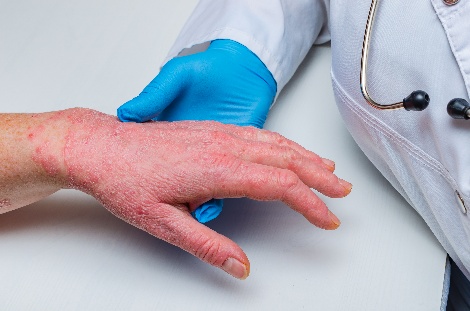
Glove ingredients can also cause allergic contact dermatitis. These glove ingredients are accelerators such as thiurams or carbamates which are added to gloves to make the comfortable to wear and give them stretch etc.
Hands and wrists are often affected.
The good news is there are now gloves varieties available that are accelerator free, including surgical and examination gloves.
These are called Microtouch Nitra-free and Gammex non-latex sensitive.
Information about these gloves can be found on the Ansell website.
Urticaria
Urticaria is different as its more of an immediate type of allergy, so can happen within minutes of contact.
People who wear gloves that are too small, may experience urticaria or immediate itching and redness. It is not an allergy to the glove ingredients but a reaction to the pressure of having gloves that are too tight. This can particularly impact people who have very sensitive skin or a condition called dermographism.
General gloves tips
- Gloves should be worn to protect against wet work including dishwashing
- Latex gloves should be avoided as they can contribute to latex allergy, including dishwashing rubber gloves. There are alternatives available.
- Ensure you wear the right glove for the job or task being performed.
- Wear the correct size glove, that is not too small.
RASH
Resources About Skin Health or RASH was an initiative that was developed in 2006 and is a training package designed to educate the workplace, and students attending training institutions, about occupational contact dermatitis.
RASH (Resources About Skin Health) is a training package designed to educate the workplace, and students attending training institutions, about occupational contact dermatitis.
RASH is a “train-the-trainer” style education package, aiming to raise awareness about appropriate ways to prevent occupational contact dermatitis. RASH can be used as a training tool in workplaces, e.g. short 15 minute ‘toolbox’ talks or training sessions of about 30 minutes, or for induction training, for self-paced learning, or included in OH&S units at training institutions.
RASH is designed for use in a wide range of industries using the general information and general presentation. There are also 5 industry-specific sections included in the reference guide. The industries selected are those commonly affected by work-related skin problems. These 5 presentations are also now available on this website – visit the RASH presentations section to view these.
Presentation available include:
- Construction
- Food handling
- Hair and beauty
- Healthcare
- Mechanical and automotive
Despite the package being developed almost 20 years ago, much of the information is still relevant today.