
Skin Care
What sort of skin care products can be used?
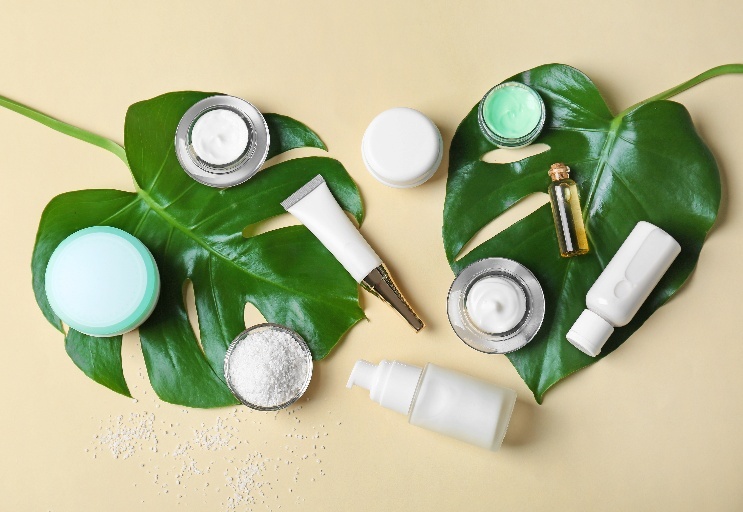
Optimal skin care is vital for the prevention and also the treatment of contact dermatitis and for atopic eczema. Undamaged skin provides an excellent natural barrier to skin irritation and the development of allergy. Understanding what substances or conditions aggravate the skin and avoiding them is also very important.
Skin care involves several different components, which are all equally important. It includes appropriate glove use, avoiding irritating soaps and hand cleaners, use of a soap substitutes, use of moisturisers and barrier creams and use of topical corticosteroids (when necessary).
Optimal skin care practices should be encouraged in the home and in the workplace setting and anywhere there is the potential for skin problems. It is particularly important that workplaces have a skin care plan implemented for all workers to follow. This should spell out appropriate use of hand washes, moisturisers and gloves which are appropriate for the work environment. This plan should encourage the set-up of skin care systems which are easy for employees to access and use e.g. next to all wash stations, a moisturiser +/- a barrier cream should be provided.
While the following sections tend to emphasise treatment of occupational contact dermatitis, for the patient with facial dermatitis, the emphasis is often €œkeep it simple.€ We see many cases of people using multiple products which contribute to irritated skin which may facilitate the development of ACD. Often people can reply on their sunscreens as a daytime moisturiser.
Toners are unnecessary. Fragrances are the most common causes of ACD and should be avoided.
Skin care involves several different components, which are all equally important.
- appropriate glove use
- avoiding irritating soaps and hand cleaners
- use of soap substitutes
- use of moisturisers and barrier creams
- use of topical corticosteroids when necessary
Hand washing
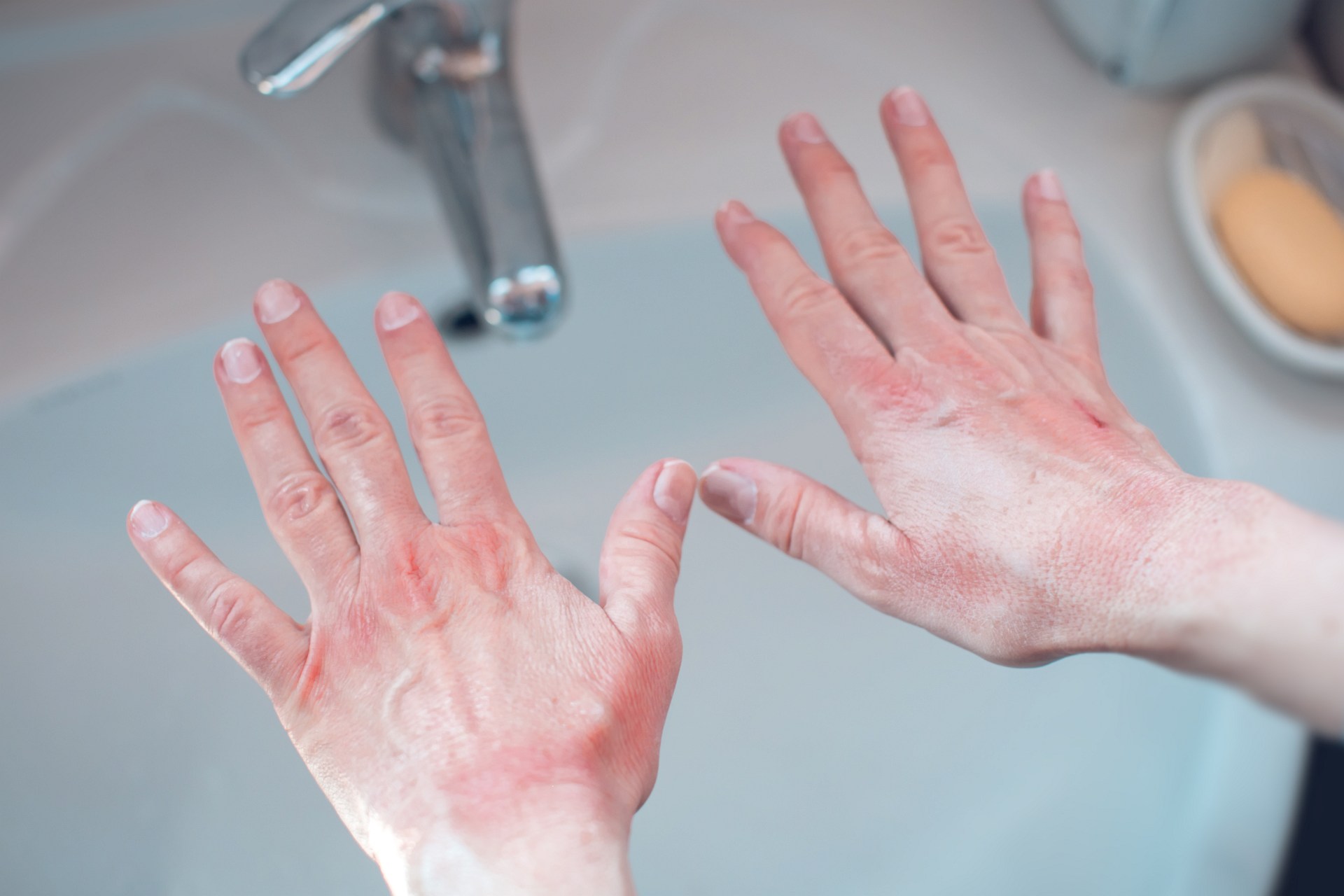
Frequent hand washing and some hand wash products can contribute to hand dermatitis.
It is important people reduce hand washing where possible and wash with warm water and not hot water, which is more damaging to the skin. Drying the hands thoroughly including between the fingers and under rings is crucial in dermatitis prevention. Excessive amounts of hand washing can also aggravate eczema and cause ICD. Sometimes this is a feature of patients with obsessive compulsive disorder.
There are a range of different hand washing products available, and the one used will depend on the task being performed and the type of work being performed. The different types are outlined below.
Replace with supporting image
Soaps
Soaps are used for general hand washing and do not contain antiseptics. Bar soaps maybe alkaline but allergy is rare. On the other hand, liquid soaps contain allergens such as fragrances and preservatives and should be avoided. In the workplace, some soaps and hand cleansers can be irritating. Soap which has sand or grit in it can be very damaging and drying.
If dermatitis is related to work, it is important people are encouraged to talk to their employer or workplace safety supplier about a suitable types of hand cleanser for the workplace. These should be in a dispenser, which is both convenient and hygienic, preventing contamination of the product and dispensing the correct amount required.
Replace with supporting image
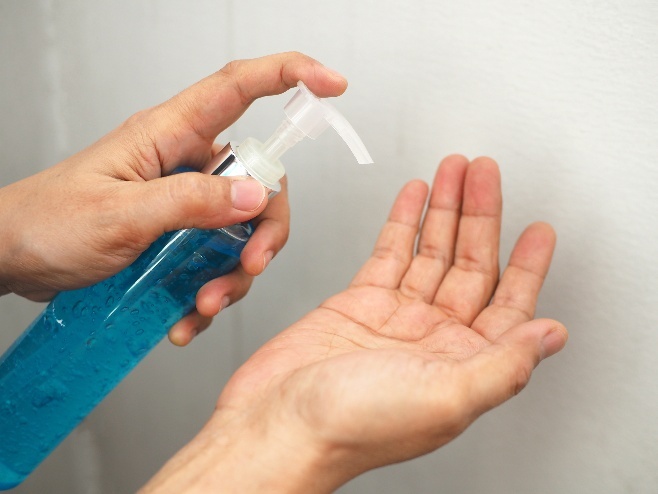
Alcohol based hand rubs
Alcohol based hand rubs (ABHR) are routinely used in the healthcare industry but since the COVID-19 pandemic have become more popular among the general community. ABHRs reduce the need for hand washing and contact with water and soaps. They also cater for those who do not always have access to hand washing facilities such as builders and other tradespersons.
Occasionally, people may think they are allergic to ABHRs, because it stings their hands when applied. Fortunately, allergy to ABHRs is extremely rare (and much less common than with liquid soaps). However, transient stinging will occur if the skin is cracked or split; even a paper cut can be unpleasant!
Fortunately, this does not cause any harm and the best way to manage this is to increase moisturising of the skin or try using a different brand of ABHR which may be less irritating.
There are 2 types of hand rubs, one type falls into the therapeutic category and the other cosmetic. Therapeutic types are commonly used in the healthcare setting and are usually alcohol based and have less ingredients. Whereas the cosmetic variety and became popular during COVID, and have more ingredients, often which are allergens.
Soap substitutes
Soap substitutes are less irritating than normal soaps as they have a similar acidity (pH) to that of the skin and therefore are preferred for people with dry or damaged skin or have eczema. These should be used at home and work if appropriate (although they can€™t be used as substitute for antiseptic/antimicrobial cleansers in the healthcare setting). There are some brands which are now approved for use in healthcare settings, for social hand washing.
Antimicrobial skin cleansers
These are usually found in healthcare environments and play a vital role in infection control. Chlorhexidine is a common ingredient in many antimicrobial hand washes but fortunately contact allergy to chlorhexidine is very uncommon. Very rarely, immediate hypersensitivity reactions are reported and can be tested on a serum test. Less allergic reactions are reported with povidone-iodine (Betadine).
Scrubbing
Scrubbing for surgery entails mechanical irritation of the skin, which can certainly cause and aggravate ICD. Use of preparations such as Skinman® after the first scrub of the day may decrease irritation and frequency of scrubbing. For more information, please refer to the occupational section on our website. Insert link here:
Moisturising creams
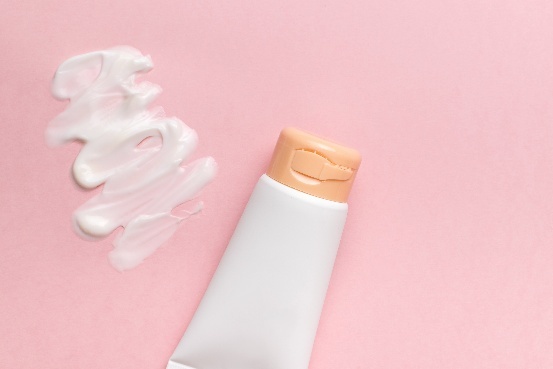
Moisturising creams are an essential element of optimal skin care.
Moisturising creams used regularly can repair the skin barrier and maintain moisture in the skin, and may prevent dry skin from becoming inflamed, and evolving into dermatitis. This is the most important treatment measure for ICD. Dryness in the web spaces between the fingers is often the place where ICD first occurs, known as the sentinel sign. The sentinel sign should be a prompt reminder to start using moisturiser or increase its usage.
Patients should be encouraged to use moisturiser on their hands regularly, especially at the end of the day or end of a shift, as it will replace and maintain moisture in the skin. There are different types of moisturisers, and it is important that patients are educated about they different types.
Things to consider include:
- Ensure appropriate moisturiser is always available for all staff
- A greasy ointment (usually thick and clear) is most effective for healing damaged skin but is not always practical for day use nor for driving. Ideally it should be used when you get home and before bed. If an ointment can't be used, a less greasy cream in a tub or tube is next best
- Moisturising lotions are also available. A lotion is a thin, watery substance often purchased in a pump pack. Pump packs of sorbolene lotion are convenient and useful for moisturising during the day, but are not generally as effective moisturisers as ointments or creams
- Some oil-based moisturisers may not be suitable for use under some gloves, as these moisturisers can damage the protective functions of the gloves. Generally, we do not recommend the use of moisturisers under occlusive (tight-fitting, waterproof type) gloves. However, at night, creams may be applied under cotton gloves. Do not use cling wrap or disposable gloves, as this may cause sweating, which may contribute to ICD
- A fragrance-free moisturiser is best. Highly fragranced moisturisers including essential oils such as tea tree and lavender may cause allergy, so these are best avoided.
Prescribed treatments
In addition to the use of moisturisers, most rashes will also need prescribed treatments, such as topical corticosteroids or topical immuno-modulators such as pimecrolimus or tacrolimus.
Topical corticosteroids (applied directly to the skin) are available in a white cream or a clear greasy ointment. Dermatologists usually prefer to prescribe ointments rather than creams, as they are more effective and they do not contain preservatives, which sometimes cause allergy.
Generally speaking, topical corticosteroids which are available over the counter are not strong enough to treat dermatitis on the hands and/or body. However, they are usually suitable for the face. As a rule, it is suggested that 1% hydrocortisone is the only steroid used on the face.
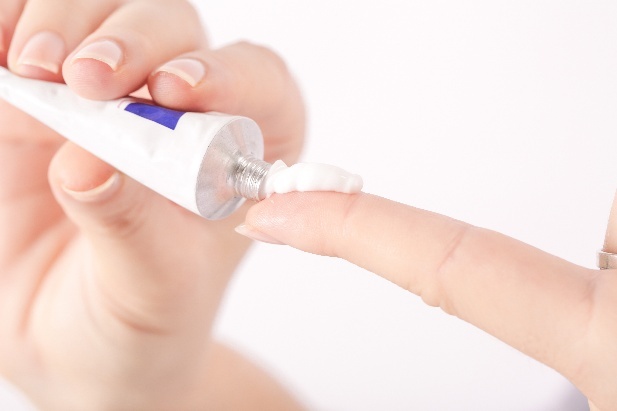
Other prescription anti-inflammatory creams or ointments such as pimecrolimus or tacrolimus which are not corticosteroid-based can also be used.
Sometimes following skin splitting or cracking, sores can develop, which may indicate an infection. Topical or oral antibacterial treatment may be indicated. In some cases, particularly where there may be co-existing psoriasis or hyperkeratotic palmar dermatitis, ointment containing calcipotriol tar may be helpful.
Important things to remember when using corticosteroid treatments are:
- They are most effective if used frequently and early during the itchy or inflammatory phase of dermatitis
- Use on affected areas and stop once the skin becomes normal
- Use them when there is no need for hand washing, such as before bed, so that they remain on the skin and will be most effective
- Apply the steroid cream/ointment and allow to soak in for a few minutes before applying the moisturiser
- Ensure the patient has a prescription which gives them adequate supply of treatment for their rash. Prescribing large quantities of topical cortisone through the PBS is the most cost-effective for patients.
Barrier creams
Evidence about the effectiveness of barrier creams is conflicting. Barrier creams often do not act as the protective shield which may be claimed, and other precautions such as wearing gloves, will still be required. However, applying barrier cream before work can make cleaning the skin easier at the end of the day, such as when working with grease, oil or paints.
Just as all gloves are not suitable for every job, not all creams are right for the job. Some are made to help protect against water-based substances and others are made to protect against oil-based substances. A safety supplier will provide advice on the best type to use in the patient’s specific workplace.
In many situations, use of a specific barrier creams is not necessary, and a moisturising cream may have a similar effect. Research suggests that after-work moisturising is most important.
Corticosteroid phobia
These days many patients are fearful of using topical steroids. However, inflammatory skin rashes need to be treated so a vicious cycle of infection does not occur. Non-steroidal options include pimecrolimus (Elidel) or compounded tacrolimus (usually in an ointment base).
When topical corticosteroids are used as prescribed and whilst rash is active, in combination with moisturiser, they are very effective.
Other treatments - topical, physical and systemic
Physical treatments may be helpful such as ultraviolet light treatment.
In severe cases, dermatologists may prescribe systemic therapies, which include the traditional immunosuppressives including methotrexate, cyclosporin and azathioprine and recently, biologics. Dupilumab (Dupixent®) and upadacitinib (Rinvoq®) are currently subsidised if treatment of atopic dermatitis is under the PBS.
Skin care for other areas of the body
The principles of skin care for the hands as detailed above, are also applicable to the rest of the body.
Nevertheless, skin care for the face can be problematic, with many patients attending the patch testing clinic reporting a history of using multiple skin care preparations causing cumulative irritation. Some skincare tips specifically for the face include:
Dermatologists are increasingly seeing young women who use multiple products daily and develop skin problems- serums, oils, day and night creams, exfoliators etc. They are rarely all necessary. Keep it simple!
- Use a mild skin cleanser (or soap substitute) or micellar water at the beginning and end of the day
- Avoid toners, which can dry out the skin
- Moisturise regularly
- Simple formulations are best with the least amount of ingredients
- Avoid fragranced products
- Start with a less greasy lotion before progressing to a greasier cream (if tolerated)
- Avoid greasy creams if you are prone to acne
- Your sunscreen can be your moisturiser!
- Remember, the most important measure for caring for your facial skin is appropriate sun protection.
- Sunscreens can function as a moisturiser, so you don't have to double up
- Anti-ageing skin care products may help improve your skin appearance, but those containing glycolic acids or retinoids can be very irritating, especially when the skin barrier is damaged or compromised