
Community
Resources and information on common occupational and contact skin conditions — including fragrance allergy, preservative sensitivity, acrylate reactions, and metal allergy in the context of prosthetic joints.
Fragrance allergy
Fragrances are one of the most common causes of allergic contact dermatitis in Australia. In recent years, using natural, fragranced products, often purchased in brown bottles have grown in popularity. This popularity may be linked to social media and influences online, often impacting younger age groups of the population.
Fragrances can have many different names which appear on labels of products such as toiletries and cosmetics including fragrance, parfum, linalool and limonene, just to name a few. Besides reading ingredients on the package to identify if the product contains fragrance, simply smelling the product will be a clue. Fragrances are added to disguise the chemicals used in products and to make them more user friendly and attractive to use.
The community can reduce the risk of developing allergies to fragrances by avoiding contact with fragranced or natural style products and buying products that are labelled as fragrant free.
People with damaged skin with irritant contact dermatitis or endogenous eczema are more likely to develop allergic contact dermatitis as the allergens have direct entry into the body through the splits and cracks. It’s important for these people to avoid fragranced products.

Products that contain fragrances that can cause allergies include shampoo and conditioner, liquid hand wash, deodorants and moisturisers to name a few products. This list of products containing fragrances is extensive and can be found in things used at both work and home. More information can be found on our information sheet.
Please download our information sheet about fragrance allergies. Insert link.
Methylisothiazolinone
Methylisothiazolinone (MI) and methylchloroisothiazolinone (MCI) are preservatives which are used in a variety of cosmetics and some industrial products to prevent contamination by germs, particularly bacteria. They may be used in combination or MI may be used alone. In recent years, there has been an epidemic of allergic contact dermatitis to MI, especially when it was particularly prevalent in wipes, shampoos and hand washes and house paints.
It started being used in products in the early 2000’s, but really became a problem in approx. 2011/2012, with Australia having the highest rates of allergy in the world. It was initially bought to our attention through parents presenting with hand dermatitis from baby wipes. We then found it was found in many household and work products.
Fortunately, it is used less often now but is still found in some shampoo and conditioner, and house paints. When it is used in house paints, it can emit from the dry paint for up to 6 weeks. This type of allergy can result in a person presenting with rash on the face, around the eyes or neck, and exposed areas of the skin.
Sometimes if someone is allergic to Methylisothiazolinone (MI) and methylchloroisothiazolinone (MCI) they can also react to other isothiazolinones such as benzoisthiazolinone (another preservative) and octyl-isothiazolinone (an antifungal agent). If this is the case, you should also avoid these allergens
The general community should read all labels on household products
Acrylates- home UV kits
Acrylic nails are a common cosmetic practice in Australia. These can be done in salons by a professional or can be purchased online as at home kits.
Historically we used to see allergic contact dermatitis to acrylic chemicals in nail technicians. But now they are also impacting the consumer.
There are two types of acrylic nail products that cause problems; the first is the traditional acrylic or gel nail, and the second is Shellac®, which is a newly available type of long-wearing nail polish, which is becoming increasingly popular. The chemicals which can cause allergy in both of these nail products, are acrylates.
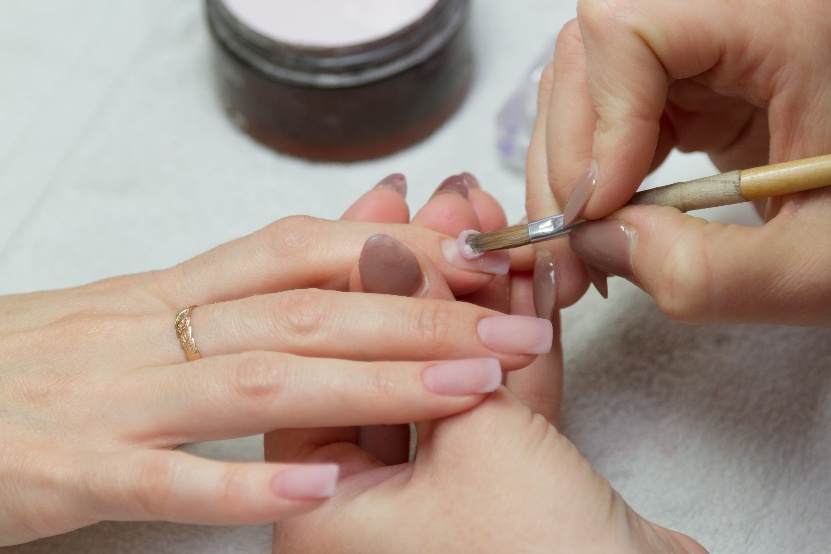
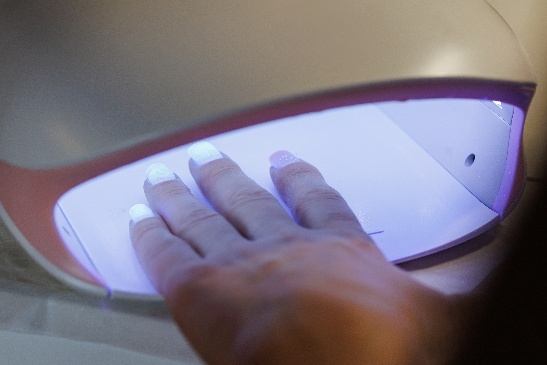
Many people are unaware that acrylates are allergenic and can cause ACD, which can result in significant skin problems. Because Shellac® looks like and is applied like a traditional nail polish, it may not be recognized to be acrylate-based. It is also important to note that when ultraviolet (UV) light is required, it is indicative that the nail ingredients are acrylates and need curing to progress from the allergenic monomer to the inert polymer state. This includes home style nail packages sold on the TV or internet.
There also needs to be greater understanding of this hazard within the beauty industry and consumer, many who are young people learning about these products on social media. Many people are unaware that a single episode of skin contact with these chemicals may lead to sensitisation and the subsequent development of ACD.
Based on international experience, we advise that nail technicians protect themselves from acrylates by wearing two pairs of disposable nitrile gloves when handling acrylate chemicals.
It is important to note the many acrylates cross react with other, meaning once someone is allergic to one, they are allergic to many. If patch tested, it means they can have several reactions.

Metal allergy- joints
Although ACD to a prosthetic joint is uncommon, there is a growing trend to patch test patients, particularly those with a history of metal allergy, prior to surgery to help guide the choice of implant used. This often arises because people describe a history of nickel allergy, however nickel is RARELY used in prosthetic joints. However, some patients are referred for patch testing AFTER implants, because of a poor outcome. In our experience, only those with a rash over the joint are likely to have a relevant allergy. There’s occasionally a handful of cases in the literature where people with an allergy have presented with swelling over the joint. Sometimes testing is undertaken for medicolegal reasons.
It is important to assess the listed ingredients in the implant to evaluate their potential role in ACD. Please refer to the Prosthetic Joint information sheet.
It is important to note that even if someone is patch test negative to implant ingredients, it does not guarantee a person will not develop an allergy in the future.
A referral from a relevant surgeon is required for patch testing to occur. Patients cannot refer themselves for testing.